Review: Watercolor Embroidery Clipart for Merch
As an embroidery designer who has spent years converting digital art into tangible thread, I approach every new asset with a mix of creative excitement and technical skepticism. When evaluating Watercolor Embroidery Clipart, I am not just looking at pretty pictures; I am assessing its viability as a core component of small business merch, branded patches, and custom apparel. For Etsy sellers, boutique owners, and craft businesses, the difference between a good design and a profitable one often lies in how well the graphic translates from screen to fabric.
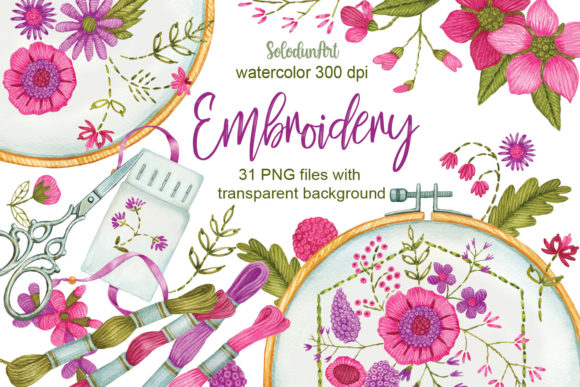
This review focuses on a specific set of Illustrations categorized under Graphics: a collection featuring round embroidery hoop clipart, violet, pink, and green floral elements, skeins of thread, and hand embroidery tools like scissors and needles. Presented as PNG files, these assets promise a soft, artistic aesthetic. But do they hold up when stitched onto a tote bag, embroidered onto a cap, or applied as a patch on a staff uniform? Let’s dive into the practical realities of using these design assets for commercial purposes.
First Impressions: Aesthetic and Brand Personality
The immediate visual appeal of this Watercolor Embroidery Clipart is undeniably strong. The watercolor style suggests a handmade, artisanal quality that resonates deeply with today’s consumer. For brands in the florist, bakery, café, or handmade gift sectors, this aesthetic communicates warmth, creativity, and attention to detail. It feels premium yet approachable, avoiding the harshness of rigid vector lines while maintaining enough definition to be recognizable.
The inclusion of specific elements—skeins of thread, scissors, needles, and the iconic round embroidery hoop—creates a cohesive narrative. These are not just random flowers; they are symbols of the craft itself. This makes the clipart particularly effective for businesses that want to highlight their "handmade" value proposition. Whether used on product packaging accents or as a logo accent on a work shirt, the design instantly signals that the brand values traditional craftsmanship.
Real-World Business Applications
In my experience, the versatility of a machine embroidery design determines its ROI. Here is how this specific clipart performs across various small business use cases:
- Embroidered Patches: The round hoop element is naturally suited for circular patches. These can be sewn onto denim jackets, backpacks, or aprons. The floral elements provide enough visual weight to stand out even at smaller sizes (e.g., 3–4 inches), making them ideal for customer gifts or loyalty program rewards.
- Staff Uniforms and Aprons: For a boutique coffee shop or a florist, subtle branding is key. Placing a small version of the "skeins of thread" or a single floral cluster on the chest of an apron adds a touch of elegance without overwhelming the garment. It elevates the uniform from basic workwear to branded attire.
- Caps and Hats: Cap embroidery requires designs that can withstand curvature. The organic shapes of the watercolor flowers and the curved line of the hoop translate well to the front panel of a baseball cap or a slouchy beanie. However, care must be taken with the negative space around the edges to ensure the design doesn’t look distorted on a curved surface.
- Tote Bag Design: Canvas tote bags are a staple for craft fairs and retail shops. The vibrant violet and pink tones will pop against natural canvas or black cotton. This clipart works beautifully as a central focal point, turning a plain tote into a walking advertisement for your brand identity.
- Digital Mockups and Marketing: Even if you sell physical goods, having high-quality printable mockup assets is crucial for online listings. Using these PNGs to create realistic previews of your products on social media can significantly boost buyer engagement. They serve as excellent digital embroidery file representations for customers who cannot see the texture in person.
Technical Considerations and Cautionary Zones
While the aesthetic is charming, an experienced designer knows that beauty does not always equal stitchability. There are specific areas where this embroidery file requires careful handling to avoid production issues.
Small Patch Sizes and Detail Loss: The watercolor effect relies on soft gradients and blended colors. In embroidery, this is achieved through dense stitching and color changes. If you reduce this design too much for a tiny sleeve cuff or a small button, the details may blur together. Always test the design at its smallest intended size. If the distinction between the violet and pink petals becomes muddy, consider simplifying the design or increasing the base size.
Thread Color Contrast: The description mentions violet, pink, and green. On dark uniforms or dark fabric textures, light pastels can get lost. You must evaluate the thread colors against your target fabric. Using a stabilizer or a backing layer might be necessary to prevent show-through, especially on thin fabrics. Conversely, on white or light backgrounds, the colors should appear vibrant, but ensure there is enough contrast between adjacent threads to maintain definition.
Stitch Density and Fabric Texture: Designs with many fine details, such as the individual strands in the skeins or the teeth of the scissors, require higher stitch density. On loose-weave fabrics like burlap or certain knits, this can cause puckering. Always test on the actual fabric type before committing to a large production run. If the fabric is highly textured, the intricate details of the clipart may become obscured.
Curved Surfaces: When embroidering on caps or sleeves, the fabric stretches. A perfectly round hoop on a flat screen may appear slightly oval on a curved hat brim. This is normal, but it affects the perception of symmetry. Adjusting the digitizing to compensate for stretch is a skill best left to experienced operators.
Impact on Brand Identity and Customer Trust
Consistency is the backbone of professional branding. Using a cohesive set of design assets like this Watercolor Embroidery Clipart helps establish a visual language. When a customer sees the same floral motif on your Instagram posts, your website, your tote bags, and your employee aprons, it reinforces brand recognition.
Furthermore, the "handmade" vibe of the clipart aligns with the growing consumer desire for authenticity. It suggests that your business is not a faceless corporation but a group of artisans who care about the process. This emotional connection drives customer trust and loyalty. A well-executed embroidered patch or a neatly stitched logo on a product label adds perceived value, allowing you to justify premium pricing for your handmade products.
Practical Designer Notes for Production
Before integrating this clipart into your commercial workflow, follow these essential steps:
- Test in Black and White: Convert the PNG to grayscale to check the contrast and composition. If the design lacks impact without color, it may struggle in monochrome embroidery.
- Check Hoop Size Compatibility: Ensure the largest element fits within your standard hoop sizes. If the design is too large, you may need to split it or resize it, which could affect the aspect ratio.
- Inspect Spacing and Outlines: Look closely at the spacing between the floral elements. Are there gaps that might require excessive jump stitches? Too many jump stitches can lead to thread breaks or unsightly floating threads on the back of the garment.
- Use Proper Stabilizer: Depending on the fabric, choose the right cut-away or tear-away stabilizer to support the weight of the thread and prevent distortion.
- Create a Client Mockup: Never assume the final result will match the screen. Produce a physical sample and photograph it under natural lighting. Show this to clients or use it for your own marketing to ensure accuracy.
- Confirm Commercial Licensing: Most importantly, verify the license terms for these Illustrations. Ensure you have the right to use them for merchandise sales, not just personal projects. Clear licensing protects your business from legal issues down the line.
In conclusion, Watercolor Embroidery Clipart offers a beautiful, versatile foundation for small business branding. Its soft, artistic style is perfect for creating memorable embroidered patches, elegant apron embroidery, and charming tote bag designs. By paying close attention to technical details like stitch density, fabric choice, and color contrast, you can transform these digital graphics into high-quality, profitable physical products that strengthen your brand identity and delight your customers.