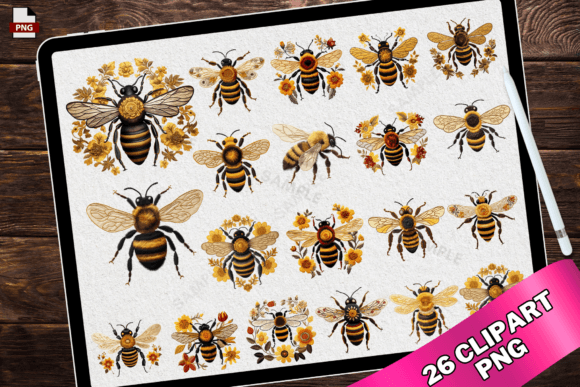
Embroidery Honey Bee PNG Clipart Review
As an embroidery designer who has spent years turning digital concepts into tangible, stitched reality, I look at every new asset with a critical eye. We are not just looking for pretty pictures; we are looking for viable design assets that can withstand the rigors of production and elevate a brand. Today, I am reviewing the Embroidery Honey Bee PNG Clipart. While marketed primarily as a graphic for stickers and journals, its potential in the realm of commercial embroidery is significant. This review focuses on how this specific pack translates from a screen to the hoop, specifically for small business owners, Etsy sellers, and apparel decorators.
First Impressions: Visual Personality and Professionalism
The title alone suggests a natural, organic aesthetic. When you purchase a pack described as high-resolution PNGs with transparent backgrounds, you are buying versatility. For a small café, boutique, or handmade shop, the visual personality of a honey bee is universally appealing. It communicates hard work, sweetness, community, and nature. Whether your brand leans toward rustic, modern, or playful, a well-executed bee design can anchor your brand identity.
In the context of Illustrations and Graphics, this clipart likely offers clean lines and distinct shapes. For embroidery, clarity is king. If the original PNG is too cluttered with tiny details that do not translate well to thread, it will become a muddy mess under the needle. However, if the design retains strong silhouettes, it promises to be a versatile tool for creating everything from subtle chest logos to bold statement patches. The 300 DPI resolution ensures that when you digitize or trace this image, you start with a crisp foundation, which is crucial for maintaining the integrity of the machine embroidery design.
Real-World Business Applications
So, where does Embroidery Honey Bee PNG Clipart shine in a commercial setting? The applications are extensive and highly profitable for small businesses.
- Embroidered Patches: This is perhaps the strongest use case. A honey bee makes an excellent focal point for iron-on or sew-on patches. These can be sold as standalone accessories or attached to denim jackets, backpacks, and hats by your customers, extending your brand reach organically.
- Staff Uniforms and Aprons: For bakeries, coffee shops, or florists, a bee logo adds a touch of warmth to staff attire. An apron embroidery featuring a bee signals quality and attention to detail to the customer immediately. It transforms a standard work shirt into a branded uniform.
- Cap Embroidery: The compact nature of most bee designs makes them ideal for the front panel of baseball caps or beanies. This is a staple item in small business merch and works exceptionally well for seasonal promotions or trade show giveaways.
- Tote Bag Design: Canvas totes are a favorite among crafters and shoppers. A centered or pocket-placed bee design adds a premium feel to what might otherwise be a plain bag. It elevates the perceived value of the handmade product.
- Product Packaging Accents: Beyond clothing, consider using the design for embroidered labels on gift boxes, tea bags, or candle packaging. This level of detail creates a luxurious unboxing experience that encourages social media sharing and repeat purchases.
Critical Considerations for Production
While the concept is sound, execution is where many designers fail. As an experienced professional, I must highlight areas where Embroidery Honey Bee PNG Clipart requires careful handling during the digitizing and production phases.
Small Patch Sizes and Detail Levels: If you plan to produce patches smaller than two inches, you must simplify the design. Fine outlines and intricate wing patterns may merge together, resulting in a blob rather than a bee. Inspect the spacing between elements closely. If the original PNG has thin lines, they may break or pucker during stitching. You may need to thicken outlines digitally before converting to an embroidery file.
Stitch Density and Fabric Texture: High stitch density can make a patch stiff and uncomfortable, especially on delicate fabrics like linen aprons or lightweight tees. Conversely, low density on dark uniforms may show through the backing material. Always test on the actual fabric type you intend to use. The texture of the fabric interacts with the thread colors; a light yellow bee on a white shirt will vanish without proper contrast.
Curved Surfaces: When placing this design on caps or sleeves, remember that flat designs distort on curved surfaces. You will need to adjust the hooping technique and potentially add underlay stitches to keep the design stable. Testing on a real cap blank is non-negotiable to ensure the bee does not look warped.
Impact on Brand Identity and Customer Trust
Consistency is the backbone of a successful brand. Using a cohesive set of design assets helps customers recognize your products instantly. A professionally executed bee motif suggests that you care about quality. It tells the buyer that you have invested time in selecting the right visuals and ensuring they are produced correctly. This builds trust and justifies a higher price point for your custom apparel or merchandise.
Furthermore, a friendly, recognizable icon like a bee fosters emotional engagement. Customers often buy from brands that reflect their values—nature, sustainability, and craftsmanship. By integrating this design into your finished product, you are not just selling a hat or a bag; you are selling an identity that resonates with your target audience.
Practical Designer Notes for Success
To ensure the best results when working with Embroidery Honey Bee PNG Clipart, follow these practical steps:
- Test in Black and White: Before committing to thread colors, view the design in grayscale. This helps identify contrast issues and compositional balance.
- Check Small Scale Legibility: Resize the PNG to the actual size of your intended patch or logo. Can you still see the wings? The antennae? If not, simplify the design.
- Review Thread Color Contrast: Ensure the chosen thread colors pop against the base fabric. Dark threads on dark fabric require lighter underlays or outline stitches to define the shape.
- Inspect Spacing: Look for areas where stitches might collide. Adequate spacing prevents puckering and ensures a smooth finish.
- Confirm Hoop Size: Make sure the final digitized design fits within your machine’s maximum hoop dimensions, leaving room for stabilizer placement.
- Test on Real Fabric: Never rely solely on digital mockups. Stitch the design on the actual fabric and stabilizer combination you plan to use. This reveals tension issues and thread pull problems.
- Create a Printable Mockup: Use the PNG to create a realistic mockup for client approval or marketing materials. This helps visualize the final product without wasting resources on physical samples.
- Compare Beside Other Assets: Ensure the style of the bee matches your other branding elements. Consistency in line weight and style across all graphics strengthens your overall aesthetic.
- Confirm Commercial Licensing: Most importantly, verify the usage rights of the PNG pack. Ensure you have permission to use the design on items for sale. Do not assume that a personal-use license covers commercial embroidery projects.
In conclusion, Embroidery Honey Bee PNG Clipart holds great promise for small business owners looking to expand their merchandise offerings. With careful digitization, attention to stitch density, and strategic placement, this design can become a cornerstone of your brand’s visual identity. It bridges the gap between digital art and tactile product, offering a charming, professional touch that customers love. Just remember: always prioritize production feasibility over pure aesthetics to ensure a flawless finished product.